

Most homeowners don’t think about their electrical panel until something goes wrong. A breaker trips for the third time in a week, the lights dim when the air conditioner starts, or an electrician mentions during an unrelated visit that the panel is “getting up there.” Then the question becomes whether the panel actually needs to be replaced, or whether something smaller is going on.
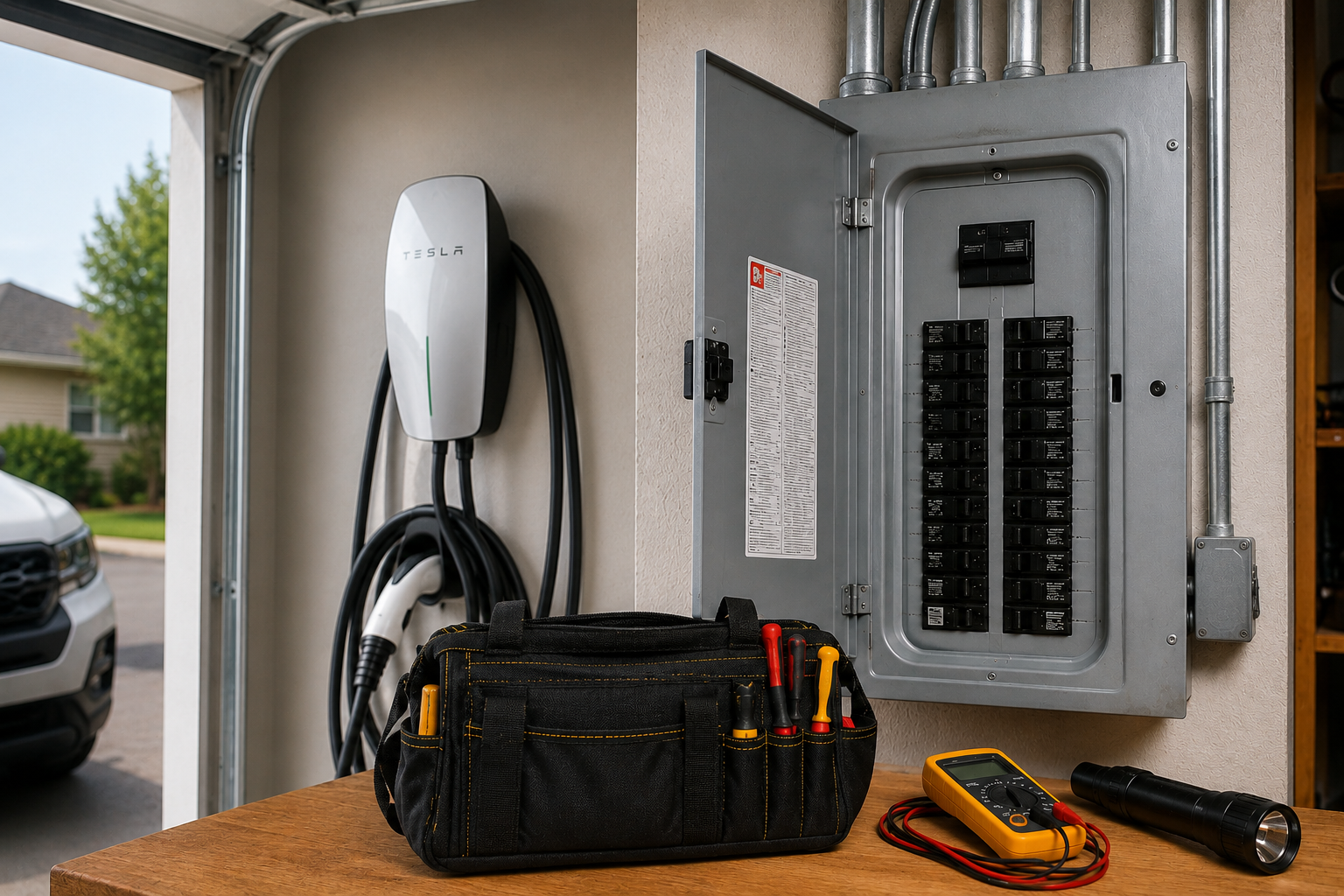
The honest answer is that it depends, and this article explains what it depends on: the warning signs worth paying attention to, why those signs can have more than one cause, and how to tell the difference between a panel that may need repair, a panel that may need replacement, and a home that simply needs more electrical capacity than it was built with. None of this replaces an on-site evaluation, but it should help you understand what an electrician is looking for and why.
What Does an Electrical Panel Actually Do?
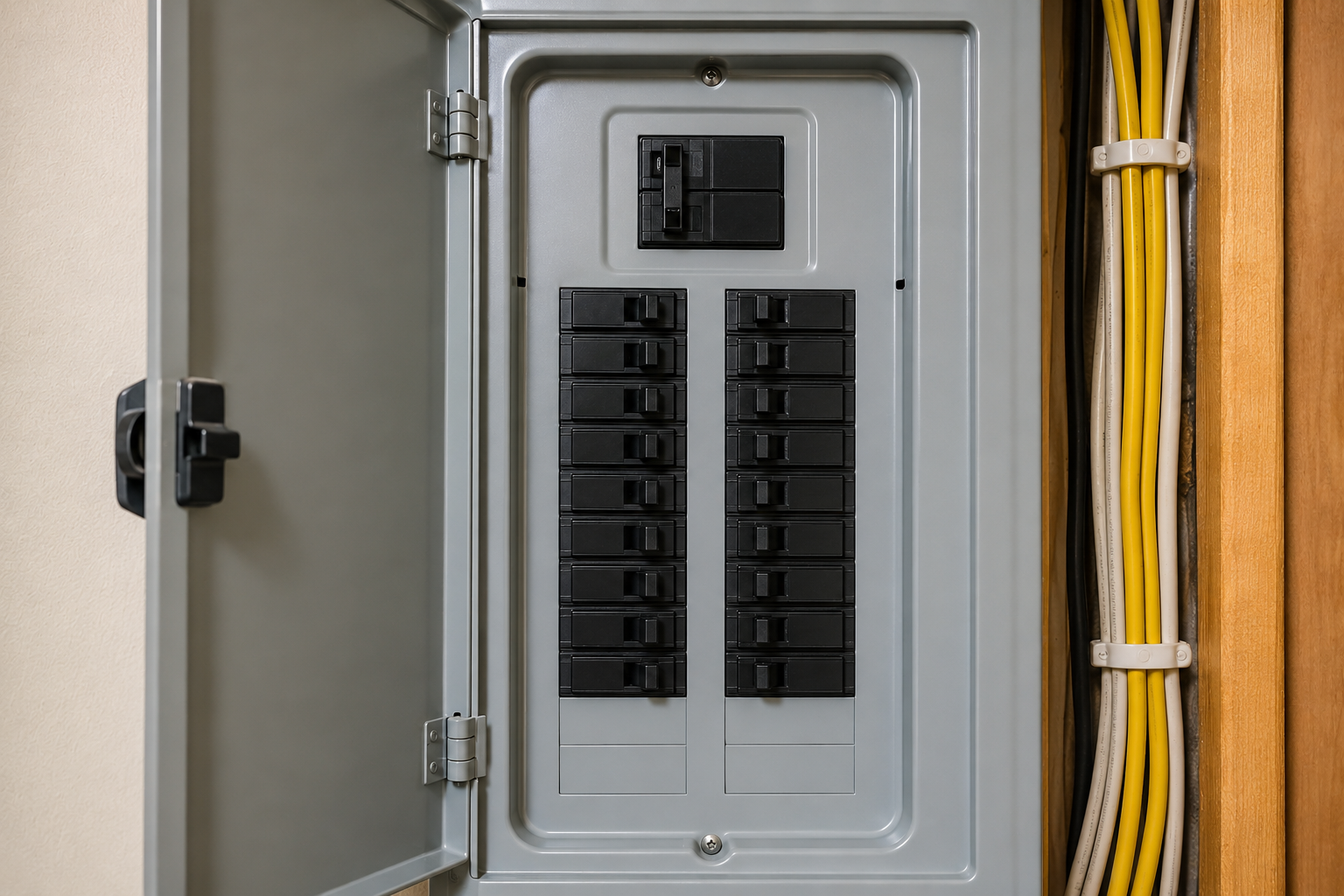
An electrical panel, often called a breaker box, receives power from the home’s electrical service and divides it into the individual circuits that feed the house. Each circuit is typically protected by a breaker designed to shut off power when it detects excessive current or certain fault conditions. The panel is the central distribution and protection point for the home’s electrical system.
The total amount of power available to a home is determined by its electrical service, which includes the utility connection and the service equipment, and is commonly described by an amperage rating such as 100 or 200 amps. The panel distributes that capacity across the home’s circuits, and it has practical limits of its own, including its rating and the number of circuits it can physically hold. A panel that’s undersized or full limits what can safely be added. A panel with deteriorating components may not provide the protection the circuits are supposed to have. Those are two different problems, and they call for two different conversations.
How Do You Know When Your Electrical Panel Needs to Be Replaced?
An electrical panel may need to be replaced when it shows signs of physical deterioration, when breakers no longer trip or reset reliably, when the panel model has a documented safety history, or when it can’t support the home’s electrical demand and no reasonable modification would address that. Symptoms alone don’t confirm any of these. A qualified electrician needs to evaluate the panel to determine whether repair, replacement, or a capacity upgrade is the appropriate response.
The reasons for replacement fall into two categories.
The first is condition. A panel is electrical equipment, and like any equipment it can degrade. Connections may loosen, components may corrode, and breakers can wear to the point where they no longer respond the way they should. Moisture, heat, and pests can all contribute. When the condition of the panel itself is the concern, and especially when more than one component appears affected, replacement is often more sensible than repairing pieces one at a time.
The second is capacity. Many homes built decades ago were designed around a much smaller electrical load than a household carries today. There was no EV charger in the garage, no standby generator, no pool equipment, no tankless water heater, and no expectation of running air conditioning continuously through a Central Texas summer. A panel in good condition can still be the wrong panel for the way a home is used now. In that situation the panel isn’t failing. It’s out of room, and the conversation shifts from replacement to an upgrade in electrical service.
What Are the Most Common Warning Signs of a Failing or Outdated Electrical Panel?
The most common warning signs include breakers that trip repeatedly or won’t reset, lights that flicker or dim, warmth or buzzing at the panel, burning odors, scorch marks or discoloration near breakers, visible rust or corrosion, and a panel with no room for additional circuits. Each of these can have several possible causes, so a symptom is a reason for professional evaluation rather than proof that the panel must be replaced.
Why does my circuit breaker keep tripping?
Breakers that keep tripping are one of the most common reasons homeowners call MEP Electric about their electrical panel. A breaker that trips repeatedly is usually responding to something on that circuit. Possible causes include too many devices drawing power on a single circuit, an appliance with an internal fault, a wiring problem somewhere along the circuit, or a breaker that has worn and now trips more easily than it should. Only one of those possibilities is a panel problem, and an electrician has to determine which one applies.
Without touching anything, you can note whether the trips seem tied to one circuit or several. One circuit that trips whenever two high-draw appliances run at the same time points toward the load on that circuit. Breakers on unrelated circuits tripping, a breaker that feels warm, or a breaker that won’t stay reset are patterns worth reporting sooner rather than later.
Sometimes the appropriate fix is a circuit-level repair, a replaced breaker, or an added circuit for a kitchen, workshop, or other high-demand area. That kind of work typically falls under electrical repair services rather than becoming a panel project. Other times, tripping is one symptom among several that together suggest the panel is nearing the end of its useful life.
Do flickering or dimming lights mean there’s a panel problem?
Flickering or dimming lights can be associated with a panel problem, but they can also be caused by a loose connection on a single circuit, a problem with the utility service entering the home, a failing appliance motor, or the momentary voltage change that can occur when large equipment such as an air conditioner starts. The pattern of the flickering matters more than the flickering itself.
A brief dip when large equipment starts can have several explanations, some minor and some not, and an article can’t tell you which applies to your home. Dimming that is pronounced, persistent, getting worse, or happening throughout the house rather than in one area should be professionally evaluated. Whole-house flickering in particular may indicate a problem at the main connections, the service, or the utility side.
What can heat, buzzing, burning odors, discoloration, corrosion, or moisture indicate?
Warmth on the panel cover, a persistent buzzing or crackling sound, a burning or hot-plastic odor near the panel, dark or melted-looking spots around breakers, rust or corrosion on the panel, and any sign of water intrusion may be associated with overheating connections, failed breakers, or environmental damage affecting the panel’s components. Under normal conditions, a panel generally shouldn’t be noticeably warm, shouldn’t make sustained noise, and shouldn’t produce any odor.
These are the signs that separate “mention it to an electrician” from “act now.” If you notice smoke, sparking, visible arcing, a strong burning odor, or scorch marks, treat it as a safety issue. Keep people away from the panel, don’t attempt to investigate the source, and don’t open or touch anything. If there’s any indication of fire or you’re unsure whether the situation is safe, call emergency services first. Once immediate safety is addressed, a qualified electrician should evaluate the panel before it’s used normally again. Situations like this are what an emergency electrician is for.
Corrosion and moisture are easy to overlook. Panels in garages, on exterior walls, or in utility spaces with humidity or leaks can deteriorate slowly over years without producing obvious symptoms, so visible rust is worth mentioning to an electrician even when nothing else seems wrong.
Does an Old Electrical Panel Automatically Need to Be Replaced?
No. Age by itself isn’t a reason to replace an electrical panel. A panel that has stayed dry, hasn’t been overloaded, and hasn’t been improperly modified may remain serviceable for many years. What matters more than age is the panel’s condition, whether it’s appropriate for the home’s current electrical demand, and whether the specific panel model has any known safety history.
That said, age is a reasonable trigger for an evaluation. Older panels may be more likely to have loosened connections, worn breakers, or protective features that don’t match what’s expected of newer equipment. They may also have been modified at some point by someone who wasn’t qualified, which isn’t always visible from the outside. And some older panel brands and models have documented reliability concerns that lead electricians to recommend replacement regardless of how the panel appears to be performing. If you don’t know what kind of panel you have, an electrician can identify it during an inspection. How long any panel lasts depends heavily on its environment and how it has been used, which is why there’s no single reliable number.
What about Federal Pacific and Zinsco electrical panels?
MEP Electric still encounters older Federal Pacific and Zinsco electrical panels frequently in Central Texas homes. These panel types have known safety and reliability concerns, so finding one is a good reason to have the electrical system professionally evaluated. Homeowners should not open the panel or attempt to diagnose it themselves. A licensed electrician can identify the panel, assess its condition, and explain whether replacement is appropriate for the specific home.
Can an Electrical Panel Be Repaired Instead of Replaced?
Often, yes. Many problems that show up at the panel are limited to a single breaker, connection, or circuit, and those can frequently be repaired without replacing the panel. Replacement tends to make more sense when problems affect multiple components, when replacement parts for the panel are no longer available or reliable, when the panel has a known safety issue, or when the panel’s capacity is the underlying limitation.
The terms get used interchangeably and shouldn’t be.
A repair addresses a specific fault: a failed breaker, a damaged connection, a circuit that isn’t performing correctly. The panel stays.
A replacement swaps the existing panel for a new one, typically at the same service capacity. This is generally the right move when the panel itself is in poor condition but the home’s overall capacity is adequate.
An upgrade increases the home’s electrical service capacity, most commonly from 100-amp to 200-amp service. This usually involves a new panel and may also involve changes to other parts of the service, depending on the property. An upgrade is about capacity rather than condition, though the two are sometimes addressed together.
Homeowners are sometimes told they “need a new panel” when what they actually need is a repair, or told they need a repair when the panel is genuinely at the end of its life and they’d be better served replacing it once rather than patching it repeatedly. A thorough electrical inspection is the appropriate starting point when it isn’t obvious which category a panel falls into.
Should I Upgrade My Electrical Panel?
An electrical panel upgrade may make sense when the home’s electrical demand exceeds what the existing service can safely support, or is about to because of planned additions. Common triggers include installing an EV charger, adding a standby generator, adding a pool or spa, replacing HVAC equipment, converting to electric appliances, building an addition, or finding that the panel has no open space for new circuits. Whether any of these actually requires an upgrade depends on the home’s existing capacity and how much of it is already in use.
It’s easy to assume every new piece of equipment means a bigger panel, and that isn’t the case. The question an electrician answers during an evaluation is whether the existing service has enough headroom for the new load once everything else in the home is accounted for. Sometimes it does. Sometimes a subpanel or an added circuit addresses the need without changing the service capacity. And sometimes the home is already near its limit and the upgrade is genuinely necessary.
An EV charger is one of the most common reasons homeowners ask about panel capacity, because a Level 2 charger can represent a substantial continuous load. Whether it fits on the existing service depends on the charger’s amperage, the home’s total load, and what else runs at the same time. Some homes can add a charger without an upgrade; others can’t. Evaluating that question is part of planning any EV charger installation.
A standby generator affects the panel differently. The generator doesn’t add ongoing load to the home, but connecting one typically involves transfer equipment and decisions about which circuits the generator will support. That work involves the panel directly, so it’s a natural time to evaluate whether the panel is in suitable condition to be part of a backup power system. The whole-home generator page covers what that installation involves.
Pool and spa equipment, HVAC replacements, and electric water heaters add up too. In the homes MEP Electric works on throughout Central Texas, other high-demand additions can include welders, space heaters, and wall-mounted air-conditioning units. Individually, none of these automatically means a panel upgrade is required. Together, in a home with a smaller service or a full panel, they can create the need for additional circuit space or electrical capacity.
What’s the difference between 100-amp and 200-amp service?
The amperage of a home’s electrical service describes how much current the service can deliver at one time. A 100-amp service was common in many homes built decades ago and may still be adequate for a smaller home with gas appliances and modest electrical demand. A 200-amp service provides significantly more capacity and is often chosen for homes with larger electrical loads such as EV charging, electric cooking, heat pumps, or pool equipment.
More capacity isn’t automatically better, and not every home needs 200 amps. A home with a 100-amp service, no plans for major electrical additions, and no capacity-related symptoms doesn’t need to upgrade because 200 is a bigger number. The appropriate service size is the one that safely supports how the home is actually used and what’s reasonably planned for it, and an electrician determines that through a load evaluation of the specific property rather than a rule of thumb.
What is a subpanel?
A subpanel is a secondary panel fed from the main panel, used to distribute circuits to a specific area such as a garage, workshop, pool equipment location, or home addition. A subpanel adds circuit space and convenience. It does not add capacity to the home’s electrical service. The total load still runs through the main service, so a subpanel can help when the problem is running out of slots, but not when the problem is running out of amps. That distinction is a common source of confusion when comparing quotes.
How Much Does It Cost to Replace or Upgrade an Electrical Panel in Central Texas?
For many MEP Electric customers, a typical electrical panel replacement or upgrade to 200-amp service falls in the $3,000 to $3,500 range. This is a ballpark range rather than a quote. The final cost depends on the existing electrical system, the condition of the panel and wiring, panel location and accessibility, permitting and inspection requirements, and whether other parts of the electrical service need to be changed. The only reliable way to know what a specific property will involve is a professional evaluation.
The scope of the project. A like-for-like panel replacement at the same capacity is a different project from a service upgrade, which may involve changes to service conductors, metering equipment, or utility coordination depending on the property. Both get called “panel replacement,” but they aren’t the same job.
The condition of what’s already there. In some homes, particularly older ones, an evaluation may identify wiring, grounding, or bonding conditions that should be addressed at the same time. This isn’t the case for every home, but it’s one of the more common reasons two similar-looking homes receive different estimates.
Location and accessibility. A panel in an open garage is generally easier to work on than one inside a finished closet or mounted on an exterior wall where the service entrance may need rework.
Permits and inspections. Panel replacements and service upgrades often require a permit and inspection, but requirements and fees vary by jurisdiction and by the scope of the project.
What’s identified along the way. An electrician sometimes finds conditions during the work that weren’t visible beforehand, and addressing them can affect the final scope.
Because so many of these factors are specific to the property, a meaningful estimate requires seeing the panel, the service, and the home’s actual electrical demand. If you’d like to understand what your home specifically would involve, reach out to MEP Electric to arrange an evaluation.
When Should an Electrician Evaluate an Electrical Panel?
An electrician should evaluate an electrical panel when there are persistent or worsening electrical symptoms, when the panel shows physical signs of damage or deterioration, when a home is being purchased or has an older panel with unknown history, and before adding significant new electrical load such as an EV charger, generator, pool, or major appliance. Urgent conditions like burning odors, smoke, or sparking call for immediate attention.
Evaluation is not the same as replacement. Plenty of panel evaluations end with an electrician confirming the panel is fine, recommending a small repair, or confirming that a planned addition will fit on the existing service. For homeowners in Temple and surrounding communities such as Belton, Killeen, Salado, and Waco, MEP Electric provides electrical panel upgrades and replacements along with the inspections that determine whether one is needed in the first place.
Frequently Asked Questions
Will upgrading my breaker box reduce my electric bill?
Generally, no. An electrical panel distributes power and protects circuits. Replacing or upgrading it doesn’t inherently reduce the amount of electricity the home’s appliances, lighting, and HVAC equipment consume, because those loads draw the same power regardless of the panel delivering it. A panel replacement or upgrade is about safety and capacity, not efficiency, so lower utility bills shouldn’t be the expectation.
How long does it take to replace an electrical panel?
It depends on the scope. A straightforward replacement at the same capacity is a different project from a full service upgrade that may involve metering equipment, service conductors, and utility coordination, and some homes require additional work once the existing system is examined. Because of that variation, MEP Electric would need to evaluate a specific project before discussing a timeframe. Power to the home is typically off for at least part of the work.
Does homeowners insurance or a home warranty cover electrical panel replacement?
It varies, and no article can answer this for your specific policy or contract. Coverage depends on the provider, the policy or plan terms, the cause of the problem, applicable exclusions, and the circumstances. Some policies and plans distinguish between failures and upgrades. The only reliable way to know is to contact your insurer or warranty provider directly and ask specifically about electrical panels before assuming anything is or isn’t covered.
Can I replace my own electrical panel?
Electrical panel replacement should be performed by a qualified electrician. Panels contain components that can remain energized even when individual breakers are switched off, the work often requires permits and inspection depending on the jurisdiction, and errors in panel work can create shock and fire hazards that may not become apparent until well after the work is done. Improperly performed or unpermitted panel work may also create complications with insurance or a future home sale.
Is a panel inspection part of a standard home inspection?
A general home inspection usually includes a visual look at the electrical panel, but it’s not the same as a dedicated electrical inspection. Home inspectors typically note obvious concerns and may recommend further evaluation, while an electrician can assess the panel’s condition, capacity, and safety in more detail. If you’re buying an older home in the Temple area and the inspection report flags the panel, a separate electrical inspection is a reasonable next step.
Have Questions About Your Electrical Panel?
If you’re dealing with breakers that keep tripping, lights that won’t stop flickering, or a panel that looks like it has seen better days, the most useful thing you can do is find out what’s actually going on. The same goes if you’re planning an EV charger, a generator, a pool, or an addition and want to know whether your current service can handle it before you commit.
Homeowners in Temple and throughout Central Texas, including Belton, Killeen, Salado, Waco, Harker Heights, and Copperas Cove, can contact MEP Electric to arrange a professional evaluation. Whether the right answer turns out to be a repair, a replacement, an upgrade, or nothing at all, an on-site evaluation is the way to find out.
If your panel is showing these signs, see our licensed electrician in Georgetown, TX page or call 254-277-0021.
