

When the power goes out in Central Texas, it rarely picks a convenient time. Spring storms roll through Bell County, summer heat pushes the grid hard, and many Temple homeowners still remember February 2021, when Winter Storm Uri left homes across Texas without power for days. A whole-home standby generator keeps your lights, refrigerator, well pump and HVAC running without you lifting a finger.
This guide covers what a standby generator is, how to choose the right size, what a proper installation involves and how to keep it ready. If you already know you want one, our generator installation page covers how we work in Temple, Belton, Killeen, Salado and the rest of Central Texas.
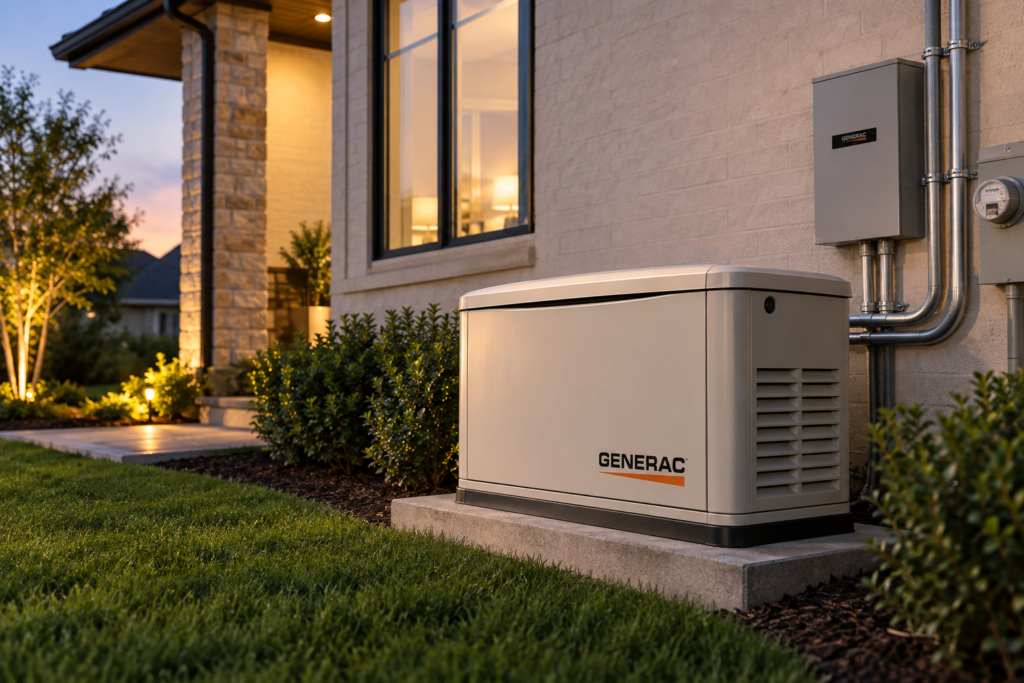
Standby Generator vs Portable Generator
A portable generator sits outside, runs on gasoline and powers a few things through extension cords or a manual inlet. You have to start it, refuel it and keep it running through the outage. It is a budget option for short outages, but it will not run central air or your whole house.
A standby generator is installed permanently on a pad outside your home and runs on natural gas or propane. When the utility power drops, an automatic transfer switch senses the outage and starts the generator within seconds. When power returns, it switches back and shuts itself down. You do not have to be home for any of it.
How to Choose the Right Size Generator
Generator size is measured in kilowatts (kW). The right size depends on what you want to keep running during an outage:
- Essentials only: refrigerator, freezer, some lights, outlets, internet and a well pump. A smaller unit covers these circuits.
- Essentials plus air conditioning: central AC is the biggest load in most Texas homes, and starting a compressor takes a surge of power. This needs a larger unit.
- The whole home: everything runs as normal, including ovens, dryers and multiple HVAC systems. This needs the largest unit, sized from your home’s actual electrical load.
A licensed electrician should size the generator from a load calculation of your home, not a guess. An undersized generator can overload and shut down at the moment you need it most. An oversized one costs more than it needs to.
What a Proper Generator Installation Involves
A standby generator is part of your home’s electrical system, so installation is more than setting a unit on the ground. A complete installation includes:
- Site assessment. Choosing a location that meets the manufacturer’s clearance rules from windows, doors and vents, with a level pad and room for service.
- Permits. Generator installations require permits and inspections. A licensed contractor pulls them so the work is documented and up to code.
- Fuel connection. The generator is connected to your natural gas or propane supply, sized for the generator’s demand. This is coordinated with your gas utility or propane provider.
- Automatic transfer switch. The transfer switch is installed at your electrical panel. It safely separates your home from the utility grid while the generator runs, which protects line workers and your equipment.
- Testing. The system is started, loaded and tested so you know it will run when the grid goes down.
If your electrical panel is older or already full, it may need work before a generator can be added. Our electrical panel upgrade service covers that, and we will tell you up front if it is needed.
What Affects the Cost of a Standby Generator
Every home is different, so the honest answer is that it depends. The main factors are:
- The size of the generator and the brand you choose
- Whether you need whole-home coverage or essential circuits only
- The distance from the generator to your panel and your gas meter or propane tank
- The condition and capacity of your existing electrical panel
- Pad preparation and local permit requirements
MEP Electric is a Generac and Kohler dealer. We look at your home in person and give you an exact price before any work starts, with no surprises later.
Keeping Your Generator Ready
A standby generator runs a short self-test on a schedule to keep the engine ready. Beyond that, it needs routine maintenance just like a car: oil and filter changes, battery checks and an inspection of the transfer switch and connections. A generator that has not been maintained is the one that fails to start during a storm. Schedule service at least once a year, and after any long outage.
Pairing a generator with whole-home surge protection also helps protect your appliances and electronics when power drops and comes back during a storm.
Generator Questions We Hear Most
Will a generator run my central air conditioning?
Yes, if it is sized for it. Air conditioning is the largest load in most Central Texas homes, so it is the main reason to size a generator from a load calculation.
Do I need to be home for it to turn on?
No. The automatic transfer switch starts the generator within seconds of an outage and switches back when utility power returns.
Can I install a standby generator myself?
No. Standby generators connect to your electrical panel and your gas supply, and they require permits and inspections. A licensed electrician should handle the electrical work for safety and to keep your warranty valid.
Generator Installation in Temple, TX and Central Texas
MEP Electric is a veteran-owned, licensed electrical contractor (TECL #37916) based in Temple, TX. We install, service and repair standby generators for homes and businesses in Temple, Belton, Killeen, Salado, Harker Heights and across Central Texas.
Call 254-277-0021 or request a free estimate and we will help you choose the right generator for your home.
